






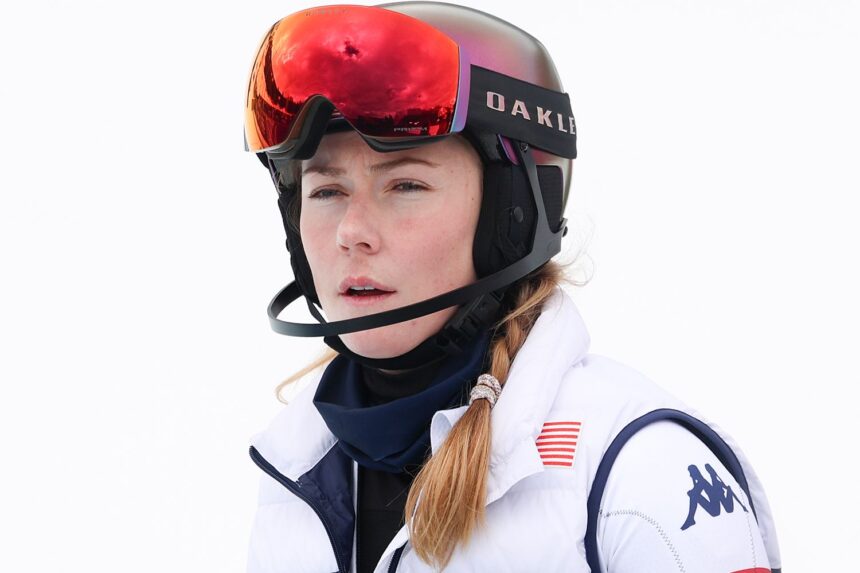
For many fans, watching Mikaela Shiffrin race at the Winter Olympics has long meant expecting brilliance. This year, however, the story unfolding around the American ski star feels quieter and more human — shaped as much by resilience as results.
At the 2026 Winter Olympics, Shiffrin missed the podium again on Sunday, finishing 11th in the women’s giant slalom. It marked her second disappointment of the Games, a surprising outcome for the most decorated alpine skier in history.
Yet beneath the standings lies a different narrative — one about recovery, expectation, and the fragile margins that define elite sport.
A Race That Slipped Away
Shiffrin entered the second run still firmly in contention. She trailed Italian leader Federica Brignone by just over a second and sat only 0.056 seconds outside medal position — a gap small enough to erase with a near-perfect descent.
But ski racing rarely rewards possibility alone.
Her second run time of 1:10.17 brought her combined total to 2:14.42, leaving her in 11th place when the final standings settled. The result followed another near miss earlier in the Games, when she and teammate Breezy Johnson finished fourth in the women’s team combined event despite entering as strong contenders.

For an athlete accustomed to podium finishes, the outcomes felt unfamiliar.
Racing After Recovery
Context matters, though. Just over a year ago, Shiffrin’s Olympic participation itself was uncertain.
In late 2024, she suffered a severe crash in Killington, Vermont, puncturing her abdomen — an injury serious enough to cast doubt on whether she would return to top-level giant slalom racing at all.
Ahead of the Olympic race, she shared that simply standing in the start gate felt meaningful. Gratitude, she said, outweighed expectation.



That perspective has shaped her approach throughout the Games, even as results have fallen short of hopes.
The Fine Margins of Ski Racing
After the team combined event, Shiffrin spoke candidly about execution — how tiny technical missteps can separate medals from near misses.
Ski racing, she noted, is defined by constantly shifting conditions and razor-thin timing differences. A small wobble or hesitation can change everything.
She also highlighted the success of teammates Jackie Wiles and Paula Moltzan, who captured bronze, emphasizing the collective spirit of Team USA even amid personal disappointment.
One More Chance
Shiffrin’s Olympic campaign isn’t over yet. She is scheduled to compete in the slalom event on Feb. 18 — a discipline where she has historically excelled and where another chapter could still unfold.
Whether or not a medal follows, her presence alone reflects a comeback many athletes never achieve.
Why This Moment Resonates
For years, Shiffrin’s career has symbolized dominance — records broken, victories accumulated, expectations met almost routinely.
This Olympics, however, offers a more relatable story: the reality that even the greatest athletes navigate setbacks, recovery, and uncertainty.
There’s something quietly compelling about watching excellence meet vulnerability. It reminds viewers that sport, at its core, isn’t only about winning. It’s about returning, trying again, and showing up despite doubt.
And sometimes, that effort becomes the story people remember most.