





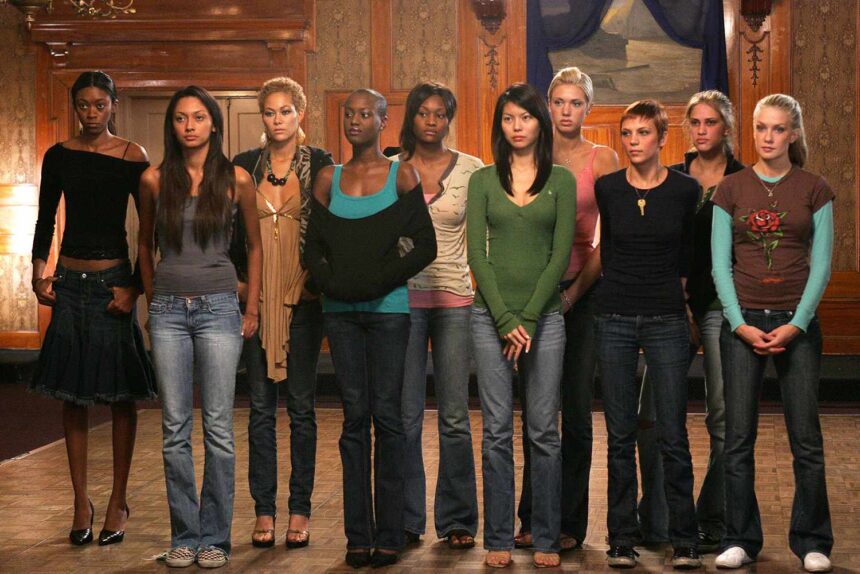
For years, America’s Next Top Model felt unavoidable. It was part fashion fantasy, part reality-TV drama — a show that shaped how millions of viewers understood beauty, ambition, and success in the early 2000s.
Now, nearly two decades after its debut, a new Netflix docuseries is asking audiences to look again — this time without the glossy edits.
Released Feb. 16, Reality Check: Inside America’s Next Top Model pulls back the curtain on the long-running reality competition America’s Next Top Model, revisiting both its cultural influence and the controversies that lingered long after the cameras stopped rolling.
A Show Born From Big Ambition
When Tyra Banks first imagined the series in 2002, she wanted more than a modeling competition. The goal, she says in the documentary, was to blend entertainment with a challenge to narrow beauty standards dominating the fashion industry at the time.
Alongside producer Ken Mok, Banks pitched the idea widely — only to face repeated rejection from major networks. The project finally found a home at struggling broadcaster UPN, whose gamble turned into a franchise that eventually moved to The CW and ran for 24 seasons between 2003 and 2018.
The show became a defining piece of early reality television, launching modeling careers and viral moments alike.

But success came with costs that many participants say weren’t fully understood at the time.
Revisiting Controversial Moments
The docuseries directly confronts criticisms that have resurfaced in recent years — including photo shoots involving racial impersonation, accusations of body shaming, and intense pressure placed on contestants’ appearance and behavior.
Banks reflects openly on some decisions, acknowledging that certain moments crossed lines. One of the most famous incidents — her emotional confrontation with contestant Tiffany Richardson — is revisited with hindsight, with Banks admitting she “went too far.”
The series frames these choices within the cultural norms of early-2000s television, while also questioning whether entertainment value overshadowed participant well-being.



Contestants Speak About What Cameras Didn’t Show
Some of the most difficult revelations come from former contestants themselves.
Shandi Sullivan revisits a storyline once presented as a cheating scandal during filming in Italy. She now alleges the encounter involved sexual assault while she was heavily intoxicated, saying production continued filming instead of intervening. Producers maintain contestants understood filming was continuous and say footage aired was reduced significantly.
Another contestant, Danielle “Dani” Evans, describes feeling pressured to undergo dental work during a makeover episode after being warned refusal could lead to elimination. Banks later apologized but defended the decision as reflecting industry expectations at the time.
Several participants also describe struggles with body image. Former contestants say criticism about weight and appearance sometimes contributed to disordered eating and emotional distress during filming.
The Cost of Making “Good TV”
Behind the scenes, creative tensions were also building.
Creative director Jay Manuel says he became increasingly uncomfortable with production decisions and felt pressured to remain with the show despite wanting to leave. He and other judges were later dismissed during a major network overhaul.
The documentary also explores how storytelling shaped outcomes. Former judges and contestants claim that photos evaluated during judging were sometimes selected for narrative impact rather than performance — reinforcing the idea that the competition was as much television drama as modeling contest.
Even eliminations, viewers learn, were carefully controlled. Contestants reportedly stayed isolated in hotels without outside contact until filming ended to prevent spoilers.
Looking Back Through a Different Lens
What makes Reality Check compelling isn’t just its revelations — it’s the tone of reflection. Many participants speak less with anger than with the clarity that comes from distance.
Reality television in the early 2000s operated under very different expectations. Emotional conflict was encouraged, vulnerability was entertainment, and contestant welfare standards were still evolving.
Today’s audiences, shaped by conversations around mental health, consent, and representation, are watching those same moments differently.
Why the Story Still Resonates
For viewers who grew up watching America’s Next Top Model, the series was more than a competition show. It influenced ideas about beauty, confidence, and success during formative years.
The new documentary raises a broader question: how much responsibility does entertainment carry for the people inside it — and the audiences learning from it?
As reality television continues to dominate streaming platforms, Reality Check feels less like a retrospective and more like a mirror held up to an entire era of TV.
And in that reflection, both creators and contestants appear to be grappling with the same realization — that cultural moments rarely stay frozen in time. They evolve along with the people who once watched them.