






Few songs feel as instantly familiar as Sweet Home Alabama. It’s a karaoke staple, a road-trip anthem, and a soundtrack to countless dive bars and summer playlists. For many listeners, the song simply celebrates Southern pride.
But tucked into one of its most recognizable lines is a reference that has puzzled audiences for decades — and ties a beloved rock hit to one of the most contentious chapters in American political history.
A Lyric That Sparked Questions
Released in 1974 by Southern rock band Lynyrd Skynyrd, the song includes the line: “In Birmingham, they love the governor.”
The governor referenced was George Wallace, a dominant political figure of the 1960s American South. Wallace served four terms as Alabama’s governor and became nationally known for his outspoken defense of racial segregation, including a 1963 inaugural address that openly supported maintaining segregated institutions.
The lyric immediately raised questions: was the band praising Wallace, criticizing him, or simply reflecting Southern attitudes of the time?
Power, Politics, and a Proxy Governor
Wallace’s political career was already unusual long before the song immortalized his name.

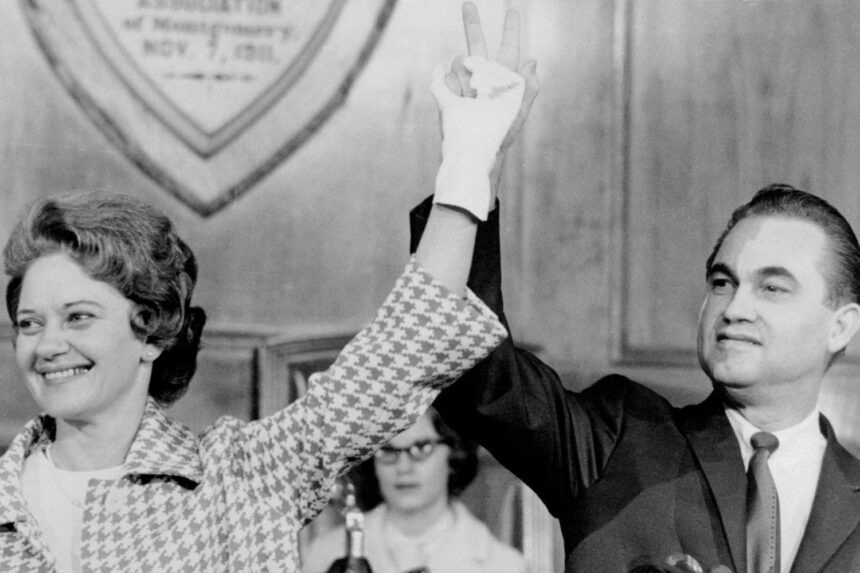
At the time, Alabama law barred governors from serving consecutive terms. Facing the end of his tenure in 1966, Wallace encouraged his wife, Lurleen Wallace, to run for office in his place.
She campaigned openly as an extension of her husband’s leadership under the slogan “Two Governors, One Cause.” Voters delivered a decisive victory, carrying nearly every county in the state.
Yet behind the political success was a deeply personal tragedy.
A Hidden Illness
Before taking office, Lurleen Wallace had uterine cancer — a diagnosis her doctor had shared only with her husband years earlier, following medical practices common at the time that allowed spouses to receive such information first.



She was not told about her illness until much later, delaying treatment.
When she became governor in 1967, her role was largely ceremonial while George Wallace informally guided policy from nearby offices. Despite frequent trips for cancer treatment, she maintained public appearances and focused on one major initiative: improving funding for Alabama’s mental health facilities after visiting overcrowded institutions.
She died on May 7, 1968, while her husband was campaigning for president. During the campaign, Wallace had publicly downplayed the severity of her condition and returned quickly to political life after her death.
He would later regain the governorship and remarry.
The Meaning Behind the Music
By the time Sweet Home Alabama reached radio audiences, Wallace’s legacy — and the South’s political tensions — were already deeply embedded in American culture.
The band often performed in front of Confederate imagery, a decision some members later said was influenced partly by marketing pressures to sell a “Southern” image rather than a clear political stance.
Guitarist Gary Rossington later explained that the background chant — the audible “boo, boo, boo” following the governor reference — was intended as criticism of Wallace, not admiration.
Still, ambiguity remained. Lead singer Ronnie Van Zant and other key band members died in a 1977 plane crash, leaving no definitive explanation of the lyric’s original intent.
As a result, interpretations have multiplied over time.
Why the Song Still Resonates
The debate surrounding Sweet Home Alabama reveals how popular culture can carry layers audiences don’t immediately notice.
For some listeners, the song represents nostalgia and regional identity. For others, it reflects unresolved tensions tied to race, history, and memory in the American South.
Music often compresses complicated realities into a few lines of verse. Decades later, those lines can reopen conversations about how societies remember controversial figures — and whether art reflects endorsement, critique, or simply observation.
A Legacy Larger Than a Song
Nearly fifty years on, Sweet Home Alabama remains both a celebration and a question mark.
Its enduring popularity shows how songs can outlive the moment that created them, gathering new meanings as generations reinterpret the past through modern ears.
Sometimes a familiar chorus carries more history than we realize — and listening closely reveals stories far beyond the music itself.