






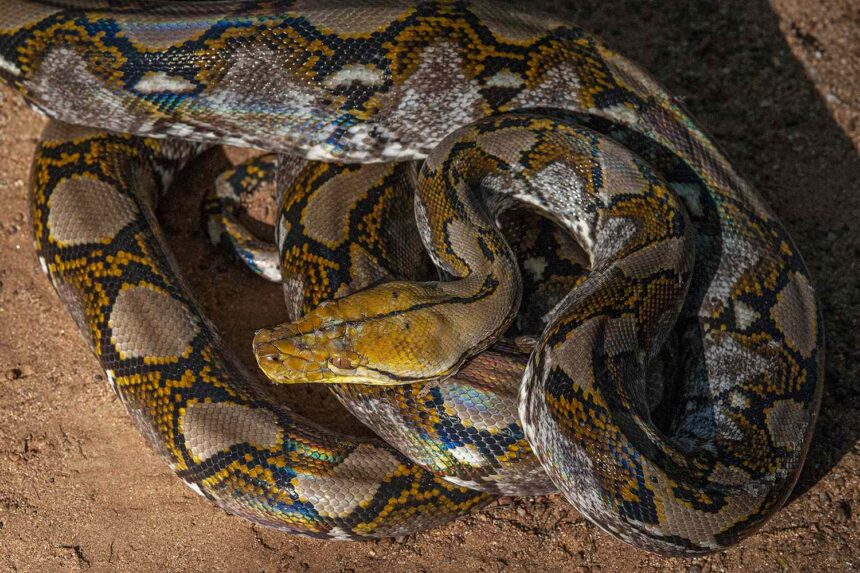
Deep in the forests of Indonesia’s Sulawesi island, a discovery both awe-inspiring and unsettling has captured global attention: a snake longer than most city buses is now officially the longest wild snake ever recorded.
The reticulated python, nicknamed “The Baroness,” has been recognized by Guinness World Records after careful measurements confirmed its remarkable size.
But beyond the headline-grabbing length lies a quieter story — one about conservation, human fear, and the fragile relationship between people and some of nature’s most misunderstood animals.
A Record Hidden in the Forest
The female python, formally named Idu Baron, was discovered in December 2025 in Maros County on Indonesia’s Sulawesi island.
When measured earlier this year, the snake stretched an extraordinary 23 feet 8 inches (7.21 meters) from head to tail. The record was officially verified on Jan. 18 and publicly announced in early February.
Weighing around 213 pounds (97 kilograms) on an empty stomach, the python represents one of the largest wild reptiles ever documented in its natural habitat.

Explorer and natural history photographer Radu Frentiu, alongside wildlife guide Diaz Nugraha, traveled to document the weighing and measuring process — a moment they described as both thrilling and humbling.
Power, Size, and Misunderstanding
Reticulated pythons are already known as the longest snake species in the world, but individuals of this scale are exceptionally rare.
Experts say a snake of this size possesses immense muscular strength and the biological ability to consume very large prey. Yet encounters between giant snakes and humans often end badly for the animals, not the other way around.
Large pythons that wander near villages are frequently killed out of fear or to prevent potential danger.



That risk is precisely why local conservationist Budi Purwanto stepped in to protect The Baroness after its discovery.
A Record With a Purpose
While The Baroness now holds the title for longest wild snake, the overall record still belongs to a captive reticulated python measured at 25 feet 2 inches in Kansas City, Missouri.
For conservationists, however, the distinction matters. A wild record highlights the health and biodiversity of natural ecosystems rather than controlled environments.
Those involved hope global attention will shift how people view giant snakes — not as threats or pests, but as essential predators that help maintain ecological balance.
Advocates are calling for stronger forest protections and stricter laws against killing snakes in protected habitats, arguing that habitat loss is pushing wildlife closer to human settlements.
Why This Discovery Resonates
Stories about enormous animals often spark fascination online, but they also reveal deeper tensions between curiosity and fear.
Large predators tend to challenge human comfort zones. They remind us that parts of the natural world still operate beyond human control — especially in regions where forests are shrinking and encounters with wildlife are increasing.
For scientists and conservationists, The Baroness represents more than a record-breaking measurement. It’s evidence that extraordinary biodiversity still exists, even as habitats face growing pressure.
A Symbol of Coexistence
In Indonesia, some conservationists hope giant snakes could eventually become symbols of regional pride and eco-tourism rather than targets of fear.
Changing perception, they say, may be the most powerful form of protection.
After all, a creature that has survived long enough to grow more than 23 feet in the wild tells a story of resilience — not just of one animal, but of an ecosystem still capable of sustaining wonders.
And sometimes, the biggest discoveries are less about size than about how they reshape the way we look at the world around us.