






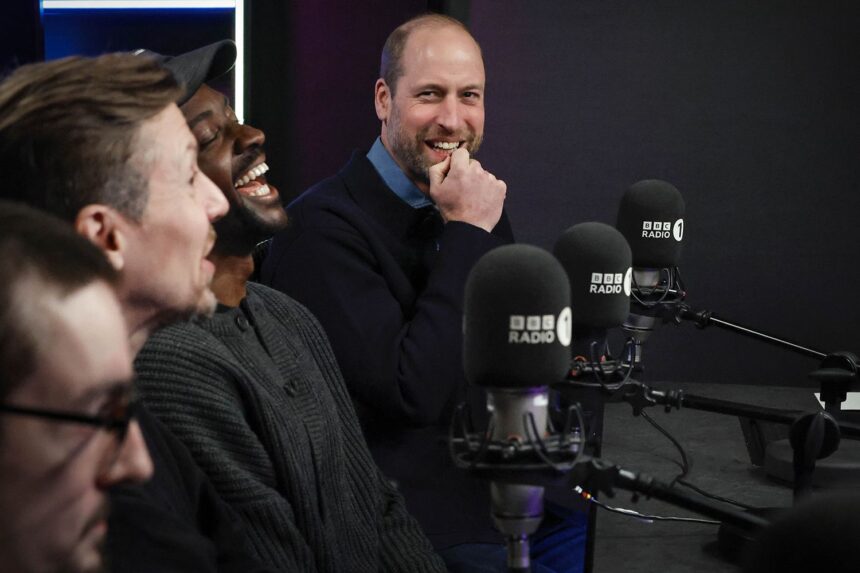
Early morning radio listeners expecting music and light conversation instead heard something more personal this week — a candid discussion about mental health led by an unexpected guest.
Prince William, 43, made a surprise appearance on a BBC Radio 1 breakfast show panel on Feb. 18, joining a conversation focused on male suicide and emotional wellbeing. Speaking openly, the Prince of Wales shared how he manages his own mental health and why he believes honest conversations among men are long overdue.
His message was simple but deliberate: learning to understand your emotions is not weakness — it’s necessary care.
A Conversation About Feelings — and Permission to Talk
During the broadcast, William encouraged listeners to regularly check in with themselves emotionally.
He spoke about the importance of self-awareness, urging people to “learn to love yourself and understand yourself.” According to him, taking time to examine why you feel a certain way can help make difficult moments more manageable.
Mental health crises, he said, can feel overwhelming but are often temporary — a reminder meant to offer reassurance to those struggling in the moment.

The discussion also included BBC Radio 1 host Greg James and British rapper Professor Green, both of whom have spoken publicly about mental health challenges in the past.
The Need for Male Role Models
A central theme of William’s remarks was the lack of visible male role models openly discussing emotional struggles.
He argued that when men in public life speak honestly about mental health, it helps normalize seeking support. Conversations that once felt uncomfortable can slowly become routine, making it easier for others to ask for help.
For William, the goal is cultural change — shifting mental health discussions from crisis response to everyday conversation.



Building a Personal “Toolkit”
The prince described coping with mental health as building a personal “toolkit” over time.
Life experiences, upbringing, and relationships all contribute tools people rely on during difficult periods, he explained. But no one has every answer, and expecting complete self-sufficiency can be unrealistic.
Instead, he encouraged people to keep adding new strategies — whether through friendships, professional support, or self-reflection — and to feel comfortable reaching out when needed.
“It’s okay to ask a mate,” he suggested, framing support as a normal part of maintaining mental wellbeing rather than a last resort.
Shaped by Personal Experience
William’s advocacy is closely tied to his earlier career as an air ambulance pilot, where he responded to traumatic emergencies and witnessed firsthand how suicide affects families and communities.
Those experiences helped shape his long-term commitment to suicide prevention, particularly among men, who statistically remain less likely to seek help for mental health struggles.
He now serves as patron of James’ Place, a charity offering crisis support designed to intervene before suicidal thoughts become actions. He has also participated in awareness events, including World Suicide Prevention Day initiatives in Wales.
Moments of Shared Grief
The prince’s emotional engagement with the issue has been visible in recent public work as well.
In a documentary-style interview, he spoke with Rhian Manning, whose husband died by suicide. During the conversation, William became visibly moved as she reflected on loss and unanswered questions — a moment that underscored the deeply human side of conversations often framed by statistics.
The exchange highlighted how grief, empathy, and vulnerability can coexist even within traditionally formal royal roles.
Why This Message Matters Now
Mental health conversations have changed significantly over the past decade, yet stigma — particularly among men — remains persistent.
Public figures speaking candidly about emotional wellbeing can shift perceptions, helping normalize vulnerability in spaces where silence has long been expected.
William’s approach focuses less on grand solutions and more on everyday habits: understanding emotions, talking openly, and accepting support when life feels heavy.
For many listeners, the message wasn’t revolutionary. It was reassuring — a reminder that emotional care is something people build gradually, one small tool at a time.
And sometimes, simply hearing someone say it out loud makes that process feel a little less lonely.