





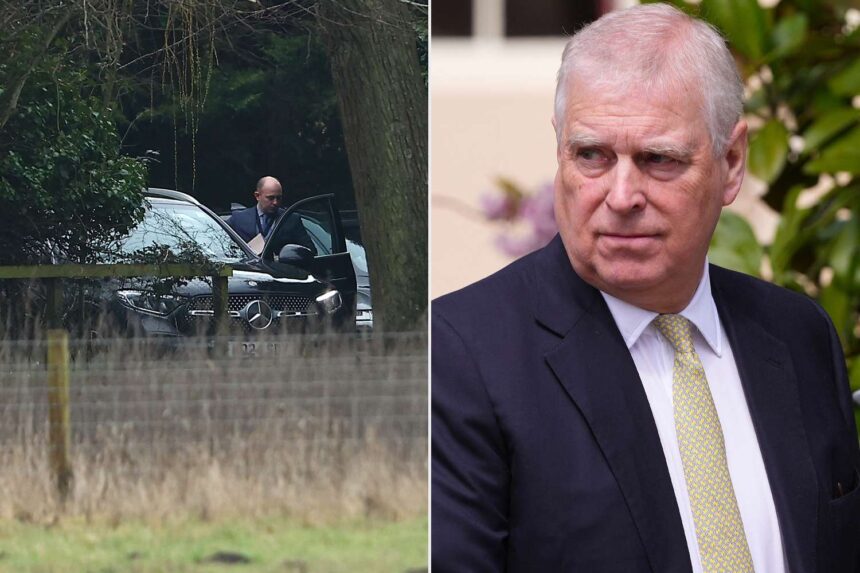
On what should have been a quiet birthday, Andrew Mountbatten-Windsor woke to police officers at the door.
The former royal — once known to the world as Prince Andrew — was arrested Thursday morning at a residence on King Charles III’s Sandringham estate in Norfolk. The date, Feb. 19, marked his 66th birthday, adding an unexpected layer of symbolism to an already extraordinary moment for Britain’s royal family.
Authorities say the arrest is tied to an investigation into alleged misconduct during Andrew’s years representing the United Kingdom abroad — a role that once placed him at the center of British trade diplomacy.
A Royal Figure Under Criminal Investigation
Thames Valley Police confirmed officers arrested a man in his sixties from Norfolk on suspicion of misconduct in public office. Searches were also carried out at addresses in Berkshire and Norfolk.
Police did not officially name the individual, but the circumstances match reports first published by the BBC identifying Andrew as the subject of the investigation.
He remains in custody while inquiries continue.

The allegations stem from Andrew’s tenure as the U.K.’s special representative for international trade and investment, a position he held from 2001 to 2011. Investigators are examining claims that confidential government information may have been shared with disgraced financier Jeffrey Epstein.
Andrew has repeatedly denied wrongdoing connected to Epstein.
Emails and a Renewed Investigation
The inquiry gained momentum after emails between Andrew and Epstein were released earlier this year by the U.S. Department of Justice as part of ongoing disclosures tied to Epstein-related investigations.
The anti-monarchy campaign group Republic filed a formal complaint, arguing the correspondence suggested confidential materials linked to Andrew’s diplomatic role had been shared improperly.



Trade envoys are bound by strict confidentiality rules that continue even after leaving office — a key legal question now facing investigators.
A Long Unraveling Inside the Royal Family
For many observers, the arrest represents the latest chapter in a slow and public distancing between Andrew and the monarchy.
In 2019, he stepped back from royal duties after a widely criticized television interview about his relationship with Epstein. Three years later, Queen Elizabeth II removed his military titles and royal patronages following a U.S. civil lawsuit brought by Epstein accuser Virginia Giuffre. Andrew denied her allegations but reached a financial settlement in 2022. Giuffre died in 2025.
More recently, King Charles III stripped his brother of remaining royal titles and honors and ordered him to vacate Royal Lodge, the Windsor home he had occupied for years. Andrew subsequently moved to Sandringham.
In a rare and unusually direct statement, Buckingham Palace said the King would cooperate fully with law enforcement if requested and expressed concern about continuing allegations.
“Nobody Is Above the Law”
The broader legal tone surrounding the case has been unmistakable.
U.K. Director of Public Prosecutions Stephen Parkinson recently emphasized that legal enforcement applies equally regardless of social standing — a remark widely interpreted as reinforcing public confidence in institutional independence.
Whether charges ultimately follow remains unclear. Police have said only that the investigation is ongoing.
Why This Moment Feels Different
Britain has seen royal scandals before, but a criminal investigation involving a senior royal family member is virtually without precedent in modern times.
The case raises difficult questions about how public roles intersect with private relationships — particularly when those roles involve access to sensitive government information.
It also reflects a wider reckoning still unfolding years after Epstein’s death in 2019, as institutions across several countries revisit past associations that once drew little scrutiny.
The Human Angle
For many Britons, the story is less about palace intrigue and more about accountability.
The monarchy has long relied on public trust as its quiet foundation. Each new development tests how that trust survives when tradition meets modern expectations of transparency and equality before the law.
Andrew’s fall from public life has unfolded gradually — not in a single dramatic moment, but through a series of institutional decisions that steadily narrowed his role and status.
Thursday’s arrest marks the sharpest turning point yet.
And as the investigation continues, the image is strikingly ordinary: police officers arriving at a countryside residence, carrying out a process meant to look the same regardless of who answers the door.