





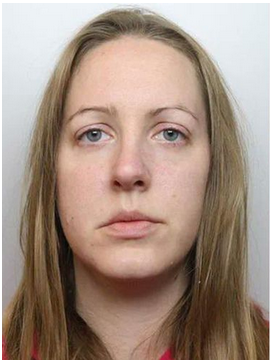
For many viewers, the name Lucy Letby already carries a heavy weight.
She is the former neonatal nurse convicted of killing babies in her care — a case that shocked the UK and rippled far beyond hospital walls. Now, a new Netflix documentary is bringing the story back into living rooms, along with fresh discomfort about evidence, privacy, and how justice is portrayed.
The series doesn’t try to resolve those tensions. Instead, it places them squarely in front of the audience.
A case that still feels unresolved
Lucy Letby worked at the Countess of Chester Hospital’s neonatal unit between 2011 and 2016.
During that period, the unit experienced an unusual rise in infant deaths. After a lengthy investigation, Letby was arrested multiple times and, in 2023, convicted of murdering seven infants and attempting to murder six others.
She received 15 life sentences and has since appealed her conviction.
Related News

What the documentary shows — and what unsettles
The Investigation of Lucy Letby, released by Netflix on Feb. 4, retraces the crimes, the police inquiry, and the trial.
It includes interviews with medical experts, lawyers, and families of victims. It also features extended police bodycam footage from Letby’s arrests and interrogations — material that had not previously been public.
Some of the most emotionally charged scenes take place inside Letby’s parents’ home, capturing her arrest and her family’s reaction in real time.
A family’s privacy under the spotlight
Letby’s parents, Susan and John, have publicly criticized the documentary for including footage filmed inside their house.



They said they were unaware the material would be used and described its release as a serious invasion of privacy in the home where they have lived for decades.
Their reaction highlights a growing tension in true-crime storytelling: where public interest ends and private grief begins.
The evidence — and the doubts around it
At trial, prosecutors argued that infant deaths spiked when Letby was on duty, presenting her as the common factor.
Dr. John Gibbs, a consultant pediatrician who helped investigate the deaths, testified to that pattern. In the documentary, he says he still believes the conviction was correct — but admits to a lingering, quiet worry about the possibility of a miscarriage of justice.
That unease is echoed elsewhere in the film.
Scientific disputes behind the scenes
Prosecutors relied in part on research by Dr. Shoo Lee, a retired Canadian neonatologist, to argue that babies had suffered air embolisms.
Lee, who was not involved in the original investigation, says in the documentary that his work was misinterpreted. He argues the skin discoloration described in court was more consistent with oxygen deprivation than injected air.
He says the realization deeply troubled him, raising concerns about whether scientific evidence was overstated.
Notes, intent, and mental health
Another key piece of evidence was a series of handwritten notes found in Letby’s home, including statements suggesting guilt.
Letby’s lawyer argues in the documentary that the notes reflected therapy advice and intrusive thoughts, not confessions. Letby herself has said she feared she may have harmed babies unknowingly.
The disagreement underscores how intent can be interpreted — or misinterpreted — in emotionally charged cases.
A mother’s memory
Among the most affecting voices in the documentary is an anonymized mother whose baby died after showing signs of improvement in intensive care.
She describes being rushed into a room filled with panic, watching doctors try — and then stop — resuscitation efforts. Letby was later charged in connection with that child’s death.
The mother says she recognized Letby immediately when the allegations emerged, recalling her presence in moments that once felt routine.
Why this story still matters
The Letby case sits at the intersection of medicine, law, and trust.
It raises difficult questions about how rare medical crimes are investigated, how expert testimony is used in court, and how certainty is built when no one witnesses a crime directly.
The documentary doesn’t argue innocence or guilt outright. Instead, it shows how, even after a conviction, doubt and grief can coexist — for families, for doctors, and for a public trying to understand something deeply unsettling.
A quiet, unfinished feeling
Watching the series, it’s hard to escape the sense that the story hasn’t fully settled.
Appeals are ongoing. Experts continue to debate the evidence. Families on all sides are left carrying different kinds of pain.
In the end, the documentary leaves viewers not with answers, but with a reminder: some cases remain heavy long after the verdict is read.