






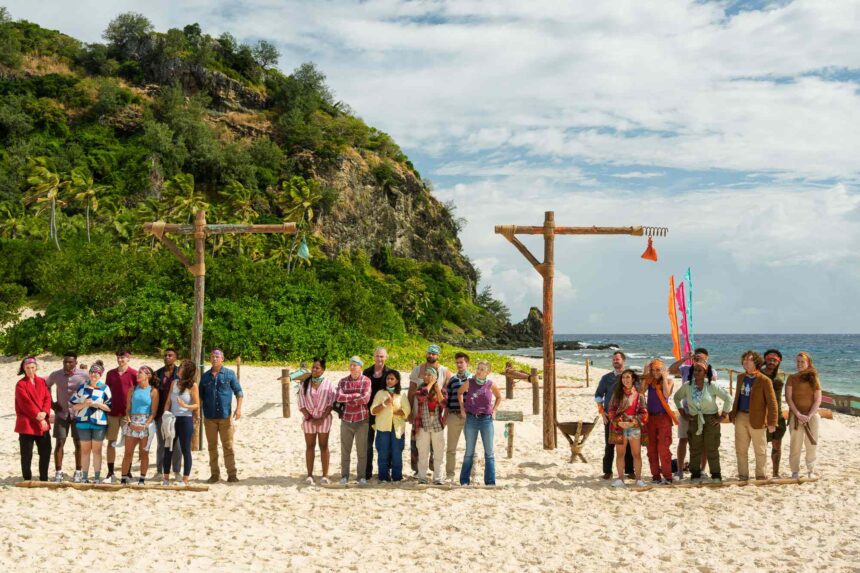
The milestone 50th season of Survivor began the way longtime fans might have hoped: familiar faces, high energy, and the promise of unfinished stories finally colliding on one beach.
But within hours of the game starting in Fiji, celebration gave way to tough decisions and an unexpected medical exit — a reminder that even after two decades, the show still thrives on uncertainty.
Hosted once again by Jeff Probst, the season launched with the largest returning-player cast in the show’s history, bringing together 24 contestants spanning generations of the franchise.
A Fast Start — and an Early Twist
The opening moments felt almost like a reunion. Players greeted one another warmly before quickly shifting into strategy mode as tribes formed and the competition began.
The Vatu tribe claimed the season’s first win during the marooning challenge, earning fire — a crucial early survival advantage.
Then came the first surprise.
Related News

Each tribe was asked to send one representative to compete for additional supplies without knowing what the challenge involved. Q, Ozzy, and Coach stepped forward, reviving old rivalries and fan memories.
Coach ultimately secured victory by grabbing a key first, winning supplies for his tribe and setting an early competitive tone.
Alliances Take Shape
As camps settled, familiar Survivor rhythms returned: alliances forming quietly while suspicions grew just as quickly.
On Vatu, Colby and Stephenie quickly bonded and aligned with Kyle and Geneieve, creating an early power structure. Smaller trust connections also began emerging, hinting at shifting loyalties still to come.



Over on Kalo, Tiffany, Dee, and Kamilla appeared to click socially, though Dee’s status as a previous winner immediately placed a spotlight on her — a common challenge for returning champions trying to lower their threat level.
Meanwhile, tensions brewed on Cila, where Jenna openly targeted veteran strategist Cirie Fields, signaling that reputation alone could make someone vulnerable.
The First Tribal Council Surprise
Cila’s loss in the opening immunity challenge intensified the pressure. During one segment, Cirie struggled physically, costing the tribe time and reinforcing doubts among her tribemates.
Heading into Tribal Council, it appeared she might become the season’s first casualty.
Instead, the vote flipped.
Although Jenna cast her ballot against Cirie, the rest of the tribe aligned against Jenna, sending her home first — a surprising outcome given her status as one of the earliest-era players represented in the cast.
In a season built on legacy, history offered no protection.
A Sudden Medical Exit
The night’s most emotional moment came not from strategy but from injury.
During the immunity challenge, players climbed a steep mud-covered wall that required teamwork and physical coordination. Kyle injured his ankle during the effort but continued competing alongside his tribe.
Later medical evaluation determined he had likely torn his Achilles tendon. Despite pleading to remain in the game, he was medically evacuated.
The departure visibly shook his tribemates, many breaking down as they helped him leave the island — a stark contrast to the competitive energy seen just hours earlier.
His exit marked the second goodbye of the premiere episode, dramatically reshaping tribe dynamics before the season had fully begun.
Why This Season Already Feels Different
Anniversary seasons often lean heavily on nostalgia, but Survivor 50 appears focused on momentum instead.
The premiere delivered rapid gameplay, immediate alliances, and high stakes from the outset. With returning players who understand how quickly fortunes can change, caution seems to have been replaced by urgency.
Two departures in a single episode — one strategic, one unavoidable — leave the remaining contestants navigating a game already altered by circumstance.
The Human Angle
What makes milestone seasons compelling isn’t just competition; it’s watching people return years later carrying new experiences, reputations, and expectations.
Some arrive hoping for redemption. Others want to prove their first win wasn’t luck. And a few simply want one more chance to test themselves in an environment that rarely gives second chances.
The premiere quietly underscored something longtime viewers recognize: in Survivor, preparation matters — but control is always temporary.
Sometimes the game changes because of strategy. Sometimes, it changes because life intervenes.
And everyone else must adapt.