





Nearly three decades after one of the most talked-about magazine launches of the 1990s, Cindy Crawford is revisiting a moment that blended fashion, politics, and cultural curiosity in an entirely new way.
In an Instagram post shared Feb. 26, the supermodel reflected on her experience working with the late John F. Kennedy Jr., remembering the energy and ambition behind the debut issue of George magazine — and the unexpected role she played in it.
The memories arrive as renewed public interest in Kennedy Jr.’s life grows, fueled by a new television drama exploring his romance with wife Carolyn Bessette Kennedy.
A Cover That Broke Expectations
When George launched in 1995, it didn’t look like a traditional political magazine — and that was the point.
Kennedy Jr., a lawyer, journalist, and publisher, envisioned a publication that explored where politics met popular culture. To introduce that idea, he made a striking choice: Crawford would appear on the inaugural cover dressed as George Washington.
Photographed by renowned fashion photographer Herb Ritts, the image showed Crawford in colonial-inspired styling — butter-yellow trousers, a cropped blouse, and a powdered wig — reimagining American symbolism through a modern pop-culture lens.
Related News

At the time, the concept sparked conversation. Politics, celebrity, and media rarely mixed so openly, yet Kennedy Jr. believed readers were ready for a broader conversation about influence and culture.
During a televised appearance with Larry King on CNN, he explained that the magazine aimed to capture the intersection of public life and entertainment — acknowledging that figures like Crawford represented both commercial success and business savvy.
A Personal Look Back
Crawford’s recent post shared more than nostalgia. Alongside archival photos and video clips, she included a handwritten note Kennedy Jr. sent to Ritts discussing editorial debates over how much text should appear on the cover.
The message offered a glimpse into the collaborative, detail-focused process behind the magazine’s launch — and into Kennedy Jr.’s thoughtful approach as an editor.



Her caption described the moment as a “trip down memory lane,” tying the memories to today’s renewed fascination with the Kennedy legacy.
A Story Revisited on Screen
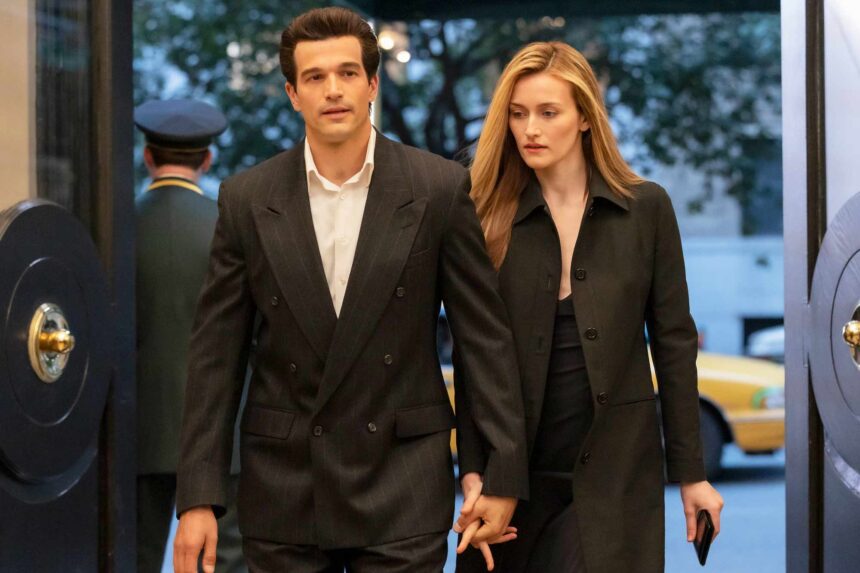
That renewed attention is partly driven by a new FX drama series created by Ryan Murphy, which chronicles Kennedy Jr.’s relationship with Carolyn Bessette Kennedy.
Actors Paul Anthony Kelly and Sarah Pidgeon portray the couple, whose whirlwind romance captured public imagination throughout the 1990s. The series references the founding of George magazine but centers primarily on their personal relationship and marriage in 1996.
Bessette Kennedy, a former Calvin Klein publicist, became a style icon in her own right, admired for her understated fashion and intensely private personality.
A Legacy Marked by Promise and Loss
John F. Kennedy Jr. carried a uniquely public identity as the son of President John F. Kennedy and former First Lady Jacqueline Kennedy Onassis. Yet through George, he sought to create something distinctly his own — a media project shaped by curiosity rather than political inheritance.
Tragically, Kennedy Jr., Carolyn Bessette Kennedy, and her sister Lauren Bessette died in a plane crash off Martha’s Vineyard on July 16, 1999, cutting short a life many viewed as full of unrealized potential.
The magazine continued for a short time afterward before closing in 2001.
Why the Moment Still Resonates
Looking back, Crawford’s cover feels surprisingly modern. Today’s media landscape routinely blends politics, celebrity, and culture — an approach that once felt experimental but now defines how many audiences consume news and storytelling.
Her post serves as a reminder that cultural shifts often begin quietly, through creative risks that only make full sense years later.
For many followers, the images are less about nostalgia and more about revisiting a moment when optimism, media experimentation, and personal charisma briefly converged.
And in remembering that collaboration, Crawford isn’t simply revisiting a photo shoot — she’s reopening a small window into a time when the future of media felt wide open.