






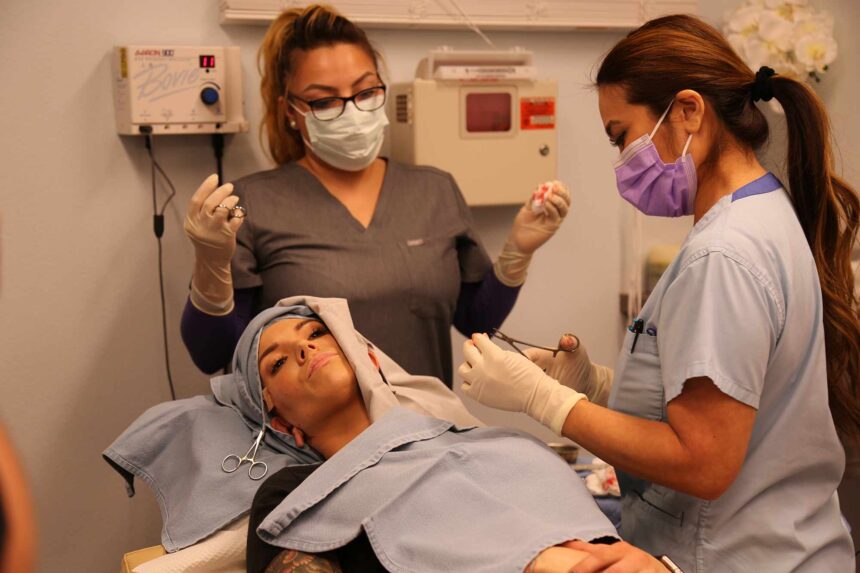
On a quiet couch in her Los Angeles home, Sandra Lee notices something she once took for granted.
Her speech, she says, isn’t quite the same.
It’s a subtle change—barely noticeable to others. But to Lee, a surgeon known for steady hands and calm confidence, it’s a daily reminder of a frightening moment that unfolded without warning last November.
At the time, she was doing what she has done for years: filming patients for her television series, Dr. Pimple Popper: Breaking Out. Then, suddenly, something felt off.
When Something Didn’t Feel Right
Lee remembers the first signs as vague and easy to dismiss.
A wave of heat. Unexpected sweating. A restless feeling she couldn’t quite explain.
Later that night, new symptoms crept in—sharp pain in her leg, trouble sleeping, and an unsteady walk down the stairs. By morning, it was harder to ignore. Her left side felt weak. Her speech was no longer clear.
Related News

“I thought, am I having a stroke?” she would later recall.
Her father, also a dermatologist, didn’t hesitate. He urged her to go straight to the hospital.
A Diagnosis That Changed Everything
At the emergency room, an MRI confirmed what she had feared: an ischemic stroke.
The condition, caused by a blockage cutting off blood flow to the brain, had already done damage. A small part of her brain tissue had died.



For Lee, the reality was difficult to process—not just as a patient, but as a physician trained to recognize the signs in others.
“It felt unreal,” she said in interviews. “Like something that happens to someone else.”
Recovery, One Small Step at a Time
Filming stopped immediately. Work, which had long been central to her identity, was set aside.
The next two months were spent in recovery—physical and occupational therapy focused on regaining balance, coordination, and strength. Even basic movements required effort.
Her hands, essential to her surgical work, became a particular concern.
“I didn’t feel like I had full control,” she shared. “That was scary.”
Her neurologist, May Kim-Tenser of Keck School of Medicine of USC, later noted that Lee was fortunate. Many stroke patients face longer or incomplete recoveries.
A Growing Risk for Midlife Adults
Lee’s case reflects a broader trend doctors are watching closely.
According to Kim-Tenser, high blood pressure remains the leading risk factor for stroke. But what’s changing is who it affects.
Rates are rising among adults aged 45 to 64—a group often juggling careers, family responsibilities, and, in many cases, chronic stress.
For Lee, the contributing factors were familiar: unmanaged blood pressure, elevated cholesterol, and the pressures of a demanding career.
Returning to Work, Carefully
By January, Lee was back in her clinic.
But returning didn’t feel simple.
She describes an undercurrent of fear—especially when performing intricate procedures that once came naturally. There was also something harder to name: a lingering emotional weight tied to where it all began.
“There’s a lot of anxiety,” she admitted. “It happened while I was filming.”
Gradually, with support from colleagues and continued therapy, her confidence began to return.
Speaking Openly About What Happened
Now, months later, Lee says she feels largely back to normal.
She continues therapy at home and takes blood thinners as part of her recovery. But perhaps the biggest shift is her willingness to talk openly about the experience.
In some communities, she notes, stroke can carry a quiet stigma—something not easily discussed.
By sharing her story, she hopes to change that.
Recognizing symptoms early, she says, can make a life-altering difference.
Why This Story Resonates
Lee’s experience is a reminder of how quickly health can shift—even for someone deeply familiar with medicine.
It also reflects a common tension in modern life: the drive to keep going, to manage stress quietly, to put off small warning signs.
For many readers, the details feel uncomfortably close to home.
A busy schedule. A few health numbers slightly out of range. A sense that things can wait.
A Different Perspective on Strength
These days, Lee speaks about her stroke not just as a setback, but as a turning point.
It changed how she sees her work, her health, and her limits.
And perhaps most of all, it reshaped her understanding of strength—not as pushing through at all costs, but as knowing when to pause.