





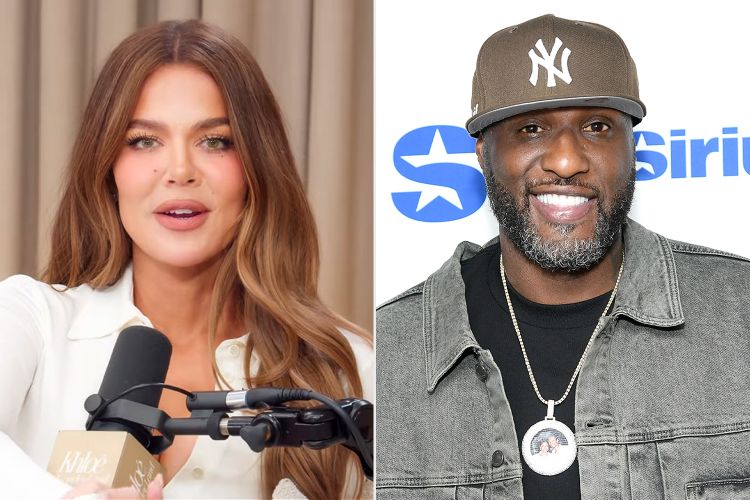
For years, much of what happened between Khloé Kardashian and Lamar Odom stayed largely private.
Now, a new documentary has brought those memories back into the open—and not without tension.
Kardashian is speaking out after Odom publicly pushed back on parts of her account in Untold: The Death & Life of Lamar Odom, a film revisiting his 2015 near-fatal overdose and long recovery.
A painful chapter revisited
The documentary centers on one of the most difficult moments in Odom’s life, when he was found unresponsive at a Nevada brothel.
At the time, Kardashian—then his estranged wife—stepped back into his life, pausing their divorce to support him through months of recovery.
In the film, she reflects on that period, describing the emotional weight of making medical decisions and staying by his side. It’s a version of events shaped by proximity and responsibility—one she says she hadn’t publicly shared in full before.
Related News

A different version of events
Since the documentary’s release, Odom has challenged key parts of Kardashian’s account.
He disputed her claim that his father did not want him placed on life support, saying he finds that unlikely. He also pushed back on the idea that Kardashian played a central role in saving his life, instead crediting his survival to faith.
The differences aren’t just factual—they touch on something deeper: who gets to define a life-altering moment, and how.
“I did this as a favor”
Speaking on her podcast, Khloé in Wonder Land, Kardashian didn’t hide her frustration.



She said she only agreed to appear in the documentary after months of hesitation, encouraged by Odom’s team and reassured it would be a positive project. She added that she was not paid for her participation.
“I did it for him,” she explained, describing the experience as emotionally taxing and something she had avoided revisiting for years.
Now, hearing Odom question her account has left her feeling blindsided. She accused him of discrediting her and suggested his tone shifted after seeing the public response to the film.
When personal history becomes public narrative
Stories like this often live in two places at once—private memory and public retelling.
For viewers, the documentary offers a structured narrative: crisis, survival, redemption. But for the people inside it, the story is messier, shaped by emotion, memory, and perspective.
Kardashian’s reaction highlights that tension. What she saw as an act of support—both then and now—has been received differently by the person at the center of it.
Why this resonates
Beyond celebrity headlines, the situation feels familiar in quieter ways.
Many people know what it’s like to revisit a difficult chapter and find that someone else remembers it differently. Add cameras, audiences, and public scrutiny, and those differences can quickly turn into something sharper.
There’s also a broader question about storytelling itself—especially in documentaries. Who owns the narrative? And how do you balance multiple truths when they don’t fully align?
A complicated kind of closure
For Kardashian, what was meant to be a one-time revisit appears to have reopened something unresolved.
And for Odom, telling his story may be as much about reclaiming his identity as it is about recounting the past.
The documentary set out to look back. Instead, it has sparked a new conversation—one that suggests some stories don’t settle as easily as they seem.