





Melania Trump’s life has often been viewed through the lens of politics and power. But long before Washington, New York penthouses, or global scrutiny, her story began quietly—inside a working-class home in Slovenia.
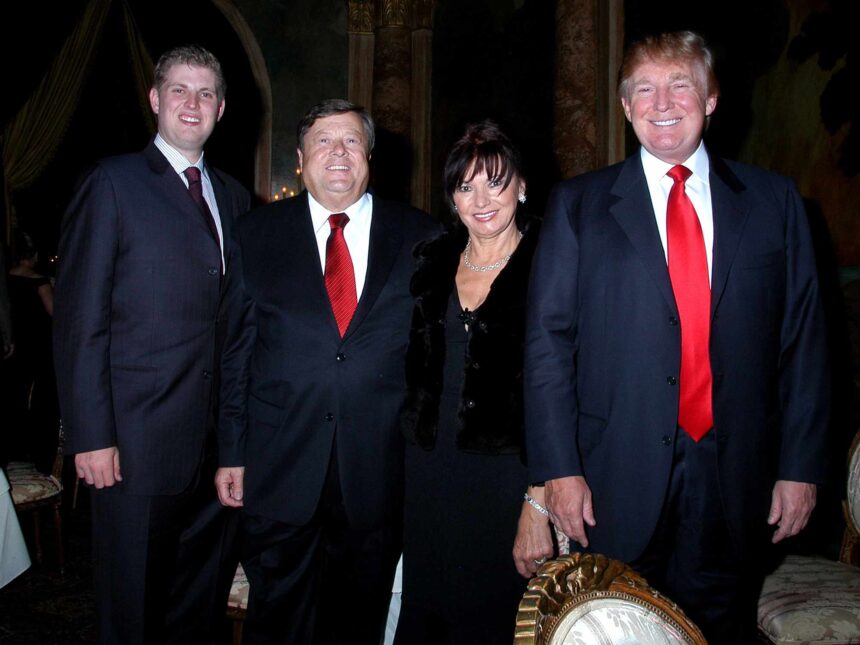
At the center of that beginning were her parents, Viktor and Amalija Knavs. Their lives, shaped by postwar Europe and steady work, left an imprint that still echoes through Melania’s public and private choices today.
A Childhood Rooted in Routine, Not Glamour
Melania Trump was born Melanija Knavs in 1970 and raised in what was then Communist Yugoslavia. Her early years unfolded in Sevnica, a hilly town about an hour from the capital, Ljubljana.
Her father, Viktor, worked a series of practical jobs—chauffeur, car salesman, and later a small business owner. He was also a member of the local Communist Party, a common affiliation at the time rather than a marker of privilege.
Her mother, Amalija, spent more than three decades as a patternmaker at a state-owned textile factory. Sewing was both her profession and her personal craft, and the hum of fabric and fittings filled Melania’s early world.
How Fashion Entered the Picture
It was Amalija’s work that quietly opened the door to fashion. She sometimes brought Melania along to fittings and factory work, exposing her daughter to design long before modeling became a career path.

When local textile companies began using young girls to model children’s clothing, Amalija helped arrange Melania’s participation. It was a small moment, but one that set a direction.
Years later, Melania would credit her mother’s discipline and attention to detail as formative influences.
A Family That Stayed Close
Viktor and Amalija married in the mid-1960s and raised two daughters—Ines, born in 1968, and Melania two years later. The sisters grew up between Sevnica and Ljubljana, attending design-focused schools and traveling modestly across Europe.
The family’s life improved gradually. They moved from an apartment into one of Sevnica’s more affluent neighborhoods, reflecting steady progress rather than sudden wealth.


Despite later global attention, those early bonds remained tight.
A Transatlantic Shift After Marriage
When Melania married Donald Trump in 2005, her parents’ lives changed too. Viktor and Amalija moved to the United States, helping care for Barron Trump after his birth in 2006.
They divided their time between New York, Washington, D.C., Florida, and occasionally the White House during Trump’s presidency. Yet Slovenia never disappeared from their lives. They kept their home in Sevnica and returned regularly.
Their presence was largely private—supportive, practical, and out of the spotlight.
Citizenship, Politics, and an Uncomfortable Contrast
In 2018, Viktor and Amalija became U.S. citizens after Melania sponsored their green cards. The process followed existing family-based immigration laws, sometimes referred to as chain migration.
At the same time, President Trump was publicly arguing to end or sharply restrict that very system. The contrast drew attention, highlighting a personal benefit emerging from a policy framework he sought to dismantle.
Legally, everything about the Knavses’ citizenship followed established rules. Politically, it underscored the human complexity behind immigration debates.
Loss, Grief, and a Quieter Public Presence
In January 2024, Amalija Knavs died at age 78 after an undisclosed illness. In the months leading up to her death, Melania stepped back from public appearances to care for her mother.
She later delivered the eulogy at a Palm Beach funeral attended by close family, including Donald Trump and Barron. The moment marked one of Melania’s most visible expressions of personal loss.
That grief continues to surface in her reflections, including in her 2026 documentary, Melania, where she speaks openly about how her mother shaped her life—and how deeply she is missed.
Why This Story Resonates
At its heart, this is not a story about power or policy. It’s about family continuity across borders, generations, and political divides.
Viktor and Amalija Knavs lived lives defined by work, routine, and steady care for their children. Their journey—from a textile factory in Slovenia to the heart of American political life—mirrors the quieter side of immigration that often goes unseen.
And in Melania Trump’s public reserve, many see the lasting imprint of those early years: a preference for privacy, loyalty to family, and an understanding that identity is shaped long before the world starts watching.