





It was a quiet Saturday afternoon online when Donald Trump posted a message that quickly rippled across political and media circles.
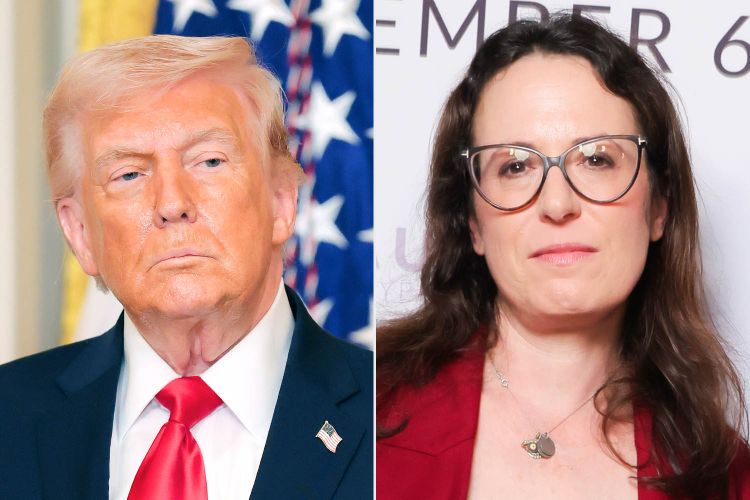
In a March 14 post on Truth Social, the president singled out veteran reporter Maggie Haberman, launching a personal attack and accusing her of publishing false stories about him.
The remarks marked the latest moment in a long-running tension between Trump and the journalists who cover him — a relationship that has often played out in public and in blunt terms.
In the post, Trump used derogatory language to describe Haberman, a White House correspondent for The New York Times and one of the most closely watched reporters covering his political career.
Related News
He also suggested that he may add her and some of her “associates” to a Florida-based lawsuit he has filed against the newspaper.
It was not immediately clear what prompted the outburst. Haberman’s most recent article about the administration had been published more than a week earlier, on March 5, and focused on the firing of Kristi Noem.

Haberman has reported on Trump for much of the past decade, building a reputation as one of the journalists most deeply sourced within his political orbit.
In 2018, she shared a Pulitzer Prize for reporting on advisers linked to the investigation into Russian interference in the 2016 election.
She later wrote the 2022 book Confidence Man: The Making of Donald Trump and the Breaking of America, an in-depth look at Trump’s rise and political style.
Haberman is also reportedly working on another book about the president with fellow journalist Jonathan Swan.



Days before Trump’s latest comments, she appeared on CNN to discuss the administration’s handling of the Iran war with anchor Kaitlan Collins.
Haberman is far from the only reporter to draw Trump’s criticism in recent months.
During a February exchange aboard Air Force One, he sharply cut off Natalie Allison of The Washington Post while she asked about deportation policies, telling her she had a “very bad attitude.”
Collins has also faced criticism directly from the president. In one Oval Office exchange earlier this year, Trump called her “the worst reporter” and accused her network of dishonesty.
Several other journalists have been singled out as well, including Nancy Cordes, Katie Rogers and Catherine Lucey — whom he once told to be “quiet, piggy.”
Clashes between presidents and reporters are hardly new in American politics.
But Trump’s approach has often been unusually direct and personal, frequently targeting individual journalists by name and using social media as a platform to respond to coverage he dislikes.
For reporters assigned to cover the White House, the exchanges are a reminder that the job can involve more than simply asking questions. It can mean becoming part of the story.
At its heart, the episode reflects a familiar tension: the push and pull between political power and the journalists tasked with scrutinizing it.
For many readers, the moment feels less like a single outburst and more like another chapter in a long-running drama about accountability, media trust, and the increasingly public relationship between politicians and the press.
In today’s digital age — where a single post can travel around the world in seconds — those moments rarely stay confined to the briefing room.