




For years, Prince Harry has made his battle with Britain’s tabloid press one of the defining causes of his public life. He has argued that unlawful newsgathering practices caused lasting harm to him and those close to him, and he has repeatedly said he wants greater accountability from powerful media organizations.
Now, that campaign has hit one of its biggest obstacles yet.
After a 46-day trial in London’s High Court, Prince Harry and six other high-profile claimants lost their case against Associated Newspapers Limited. The ruling marks a significant victory for the publisher and a disappointing moment for a group that believed the courts would validate their allegations of unlawful information gathering.
Court finds evidence did not meet the legal threshold
Mr. Justice Nicklin ruled that the claimants had not proven their allegations that the publisher obtained private information through illegal methods such as phone hacking, deception, private investigators, or corrupt payments.
Related News
In his judgment, the judge said that suspicion alone was not enough to establish legal responsibility. While concerns had been raised throughout the case, he concluded that the disputed newspaper stories had not been shown to result from unlawful information gathering.
The decision ends one chapter in a closely watched legal battle that has drawn attention well beyond the United Kingdom because of the high-profile figures involved.
Related News


Alongside Prince Harry, the claimants included actress Elizabeth Hurley, musician Elton John, filmmaker David Furnish, Baroness Doreen Lawrence, former Liberal Democrat deputy leader Sir Simon Hughes, and actress Sadie Frost.
Harry and Baroness Lawrence push back
Only hours after the judgment was handed down, Prince Harry and Baroness Doreen Lawrence released a joint statement expressing deep disappointment with the outcome.
They said they had entered the case seeking “justice and accountability” but believed they had received neither. They argued that the court failed to properly consider evidence they regarded as compelling, including material relating to private investigators and allegations of unlawful information gathering.
The pair also suggested the ruling was difficult to reconcile with earlier court decisions involving other British newspaper publishers, saying they believed similar evidence had previously been viewed differently.



Their statement reflected frustration not only with the verdict itself but with what they described as an uneven standard applied to the evidence presented during the trial.
Business as usual after the ruling
The judgment arrived while Prince Harry was already in London for an event connected to the Invictus Games Foundation.
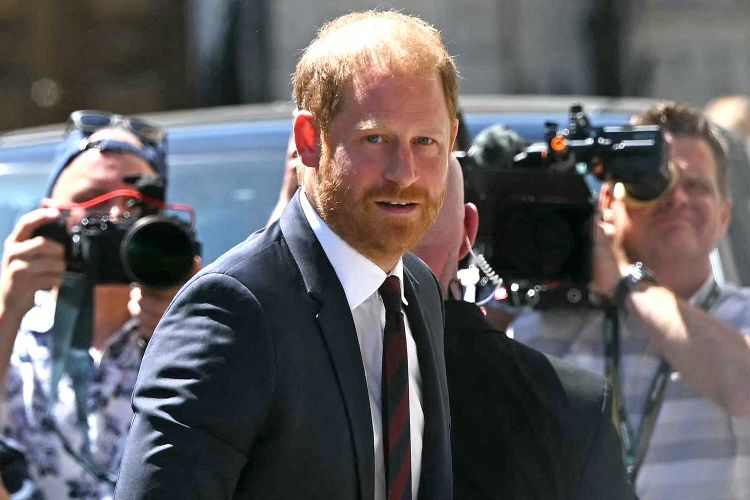
Later that day, he appeared at Chatham House, where he showed little sign publicly of the legal disappointment. Opening his remarks with a joke about the venue’s air conditioning, Harry drew laughs from the audience before continuing with the scheduled event.
His lawyer, David Sherbourne, was also seen arriving at the venue after the court decision was announced. As Harry departed, he smiled, gave a thumbs-up to onlookers, and left without commenting publicly on the ruling.
A mixed record in Harry’s campaign
Although this case ended in defeat, it does not erase earlier successes in Prince Harry’s broader legal campaign against sections of the British press.
He previously won his case against Mirror Group Newspapers, where the court found evidence of unlawful information gathering. Earlier this year, he also reached a settlement with News Group Newspapers, bringing another long-running dispute to a close.
Those earlier outcomes made this latest judgment especially significant. Rather than extending a string of legal victories, it demonstrates that each case depends heavily on the specific evidence presented before the court.
The legal process is also not entirely over. A further hearing is scheduled later this month to deal with matters arising from the judgment, although the central claims themselves have now been dismissed.
Why this case resonates
Prince Harry’s lawsuits have always been about more than celebrity headlines. They have become part of a wider debate over where journalism should draw the line between reporting in the public interest and respecting personal privacy.
For many readers, the case reflects broader questions about trust in both the media and the legal system. Supporters of the claimants see an effort to hold powerful institutions accountable, while others view the judgment as an example of the courts requiring clear evidence before making serious findings against publishers.
Whatever perspective people take, the ruling is another reminder that proving historical allegations of unlawful reporting practices can be legally complex, even when the public conversation surrounding them has lasted for years.
As Prince Harry continues to balance public duties, charitable work, and his ongoing disputes with the media, this latest decision underscores that his campaign for accountability remains far from straightforward.