






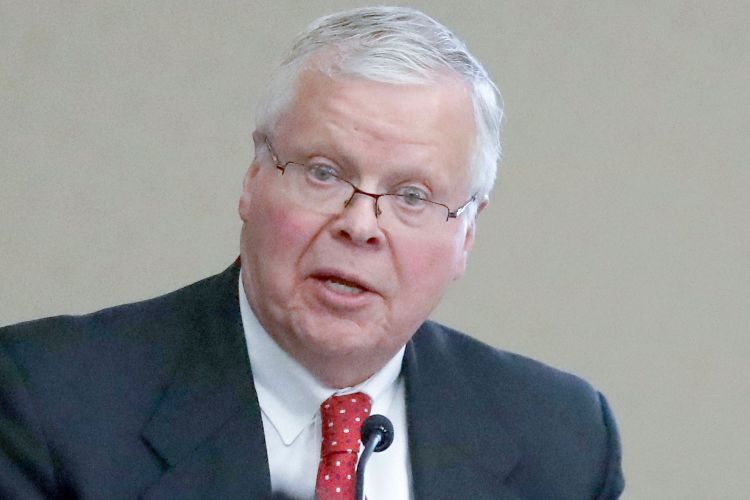
A leadership dispute at one of America’s largest public university systems is quietly unfolding behind closed doors.
Jay O. Rothman, president of the University of Wisconsin System, says he has been asked by the governing board to step down. But he has made it clear he has no intention of resigning without an explanation.
The disagreement has set the stage for a tense standoff that could shape the future leadership of Wisconsin’s public universities.
A Request to Step Aside
Rothman, who has led the Universities of Wisconsin since June 2022, revealed the situation in a letter dated March 26 to Board of Regents President Amy Bogost.
In that letter, he described a meeting held on March 21 with Bogost and two other board members, Ashok Rai and Jack Salzwedel.
According to Rothman, Bogost told him the board expected him to resign and was prepared to terminate his employment if he refused.
Related News

Rothman said he immediately asked why the board had lost confidence in his leadership. He wrote that no clear reason was given.
Without a specific explanation, he said, stepping down would violate his sense of responsibility.
“As a matter of principle,” he wrote, he would not resign.
Questions About the Process
Rothman expanded on his concerns in a second letter dated April 1 to Rai and Salzwedel.



He again said he had asked why the board had reached its conclusion but had not received a clear answer.
The lack of explanation, he argued, raises questions about the board’s process.
Rothman wrote that he fears any justification for removing him could be developed only after the decision was already made.
From his perspective, that would be difficult to defend from a governance standpoint.
Closed-Door Discussions
The Board of Regents held a closed emergency meeting on April 1 to discuss personnel matters.
Board President Amy Bogost confirmed that conversations about leadership are taking place but declined to discuss specifics.
Public university governing boards often conduct personnel discussions privately, especially when contracts or potential dismissals are involved.
Rothman indicated in his letter that the board may convene again over the Easter weekend to discuss possible next steps if he does not step down.
A Complex Tenure
Rothman came to the presidency after a career as an attorney and has overseen a system that includes 13 universities and multiple branch campuses serving roughly 165,000 students.
During his time in the role, the university system has faced several significant challenges.
Enrollment declines forced the closure of eight branch campuses. At the same time, national debates about free speech and student protests — including demonstrations tied to the war in Gaza — reached Wisconsin campuses.
Rothman has also been involved in contentious state funding negotiations.
One budget agreement with Republican lawmakers required UW campuses to eliminate diversity, equity and inclusion programs in order to secure certain state funding.
The Board of Regents initially rejected the deal before later approving it.
Rothman noted that his administration secured what he described as the largest operating budget increase for the university system in more than two decades.
Why Leadership Conflicts Matter
Leadership transitions at major university systems rarely happen quietly.
Public universities are complex institutions, balancing academic missions, political pressures, and financial realities while serving thousands of students.
When disagreements emerge between presidents and governing boards, they can shape everything from campus policies to funding decisions.
For faculty, students, and staff across Wisconsin’s campuses, the outcome of this dispute could influence how the system navigates its next chapter.
For now, though, much of the discussion remains behind closed doors — leaving the broader academic community waiting to see what comes next.