





For many in Louisville, the crash is no longer breaking news. It is something quieter now — a wound woven into daily life.
The flames are gone. The wreckage has been cleared. But for survivors, grieving families, and workers who watched their ordinary afternoon turn into catastrophe, the shock has never fully left.
Six months after UPS Flight 2976 fell from the sky moments after takeoff, killing 14 people, the tragedy is entering a new chapter — one shaped not only by mourning, but by difficult legal and safety questions.
An Ordinary Workday, Suddenly Torn Apart
On the evening of Nov. 4, 2025, a McDonnell Douglas MD-11 lifted off from Louisville Muhammad Ali International Airport, bound for Honolulu.
It never made it far.
Investigators say the aircraft suffered a catastrophic failure involving its left engine and supporting pylon assembly during takeoff. A fire ignited almost immediately.
Related News

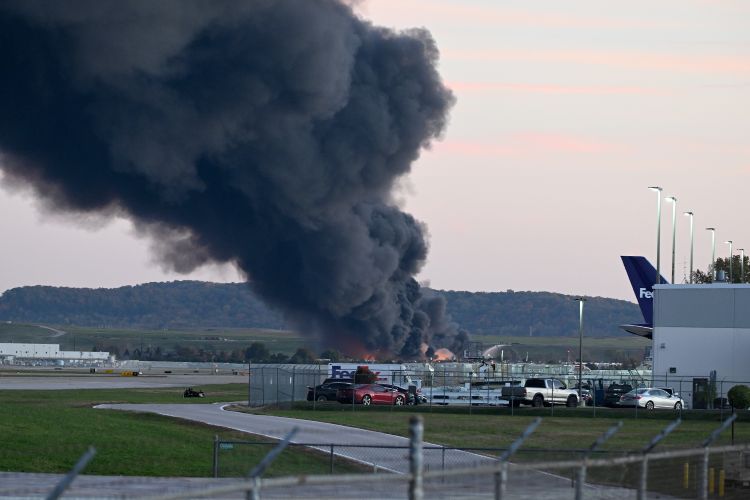
The aircraft briefly gained altitude, cleared the runway boundary, and then crashed into nearby commercial buildings, including Grade A Auto Parts and Recycling.
The resulting blaze stretched for nearly half a mile.
For people on the ground, there was little warning — only seconds between normal life and chaos.
Workers described a sudden wall of fire, violent shaking, collapsing structures, and frantic screams as people ran for safety.


Lives Lost, Families Changed Forever
Three crew members aboard the aircraft were killed.
Eleven people on the ground also died — employees, customers, and community members who had no connection to the flight itself, but happened to be in its path.
Among them was 3-year-old Kimberly Asa.
She reportedly survived the initial impact and tried to find shelter from the flames and thick smoke, but later died from smoke inhalation and burn injuries.
Her death has become one of the most heartbreaking reminders of how random tragedy can be — how quickly an ordinary day can be rewritten.
Two others suffered serious injuries, while more than 20 people were treated for minor wounds.
Aging Aircraft, Familiar Warnings
Preliminary findings from the National Transportation Safety Board suggest the plane’s left engine and pylon separated from the wing during takeoff.
Investigators have also identified fatigue cracks and structural fractures in the 34-year-old aircraft.
That matters because lawsuits now filed in Kentucky allege these were not hidden dangers.
Families, injured survivors, and local businesses argue known structural concerns about this aircraft design were not addressed with enough urgency.
The legal filings name UPS, Boeing, and the estate of one pilot among the defendants.
UPS has said it remains deeply saddened by the crash and is continuing to cooperate with investigators.
What This Means Beyond Louisville
This story reaches far beyond one city.
Cargo planes operate quietly in the background of modern life, carrying the packages that make overnight delivery, online shopping, and global business feel effortless.
Most people rarely think about those aircraft — or how old some of them are.
But this disaster has forced a wider conversation about fleet age, inspection standards, maintenance culture, and where responsibility sits when warning signs are missed.
The Human Weight of Disaster
What lingers most is not only the scale of the crash, but its intimacy.
People were working, chatting, making plans for dinner, finishing another normal day.
Then, in seconds, fire fell from the sky.
For those who survived, healing is not only physical. It is waking up with vivid memories, hearing sounds that trigger panic, or carrying grief that appears in quiet moments.
Some events change a skyline for a day.
Others change the emotional map of a community for years.
Louisville is still living with that second kind.