





For years, sunscreen was treated by many people as more of a beach accessory than a health essential. A quick layer before vacation felt sufficient. A tan was often seen as healthy, even aspirational.
Now, a growing number of public figures are sharing deeply personal stories that challenge those long-held habits.
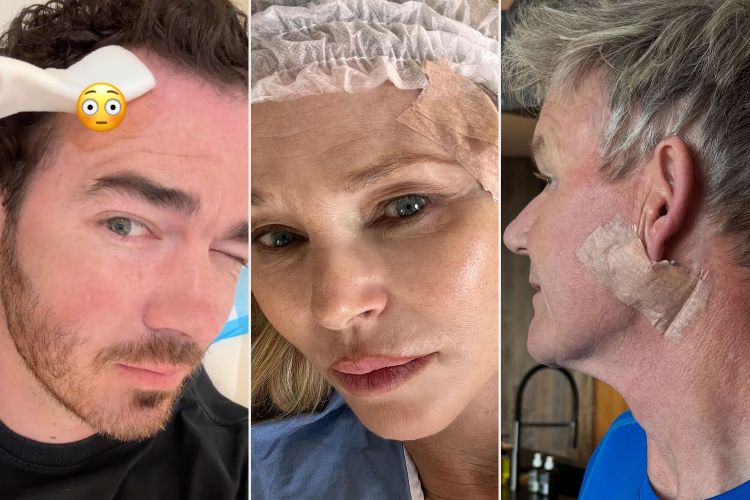
From actors and athletes to chefs and musicians, celebrities including Hugh Jackman, Gordon Ramsay and Kevin Jonas are speaking candidly about skin cancer diagnoses, surgeries and biopsies — often posting photos of scars, stitches and bandages online.
The message running through nearly all of them is surprisingly simple: they wish they had taken sun protection more seriously sooner.
A disease many people underestimate
Skin cancer remains the most common form of cancer in the United States. Health experts estimate that roughly one in five Americans will develop some form of it during their lifetime.
Melanoma, though less common, is among the most dangerous forms because it can spread quickly if not caught early. Basal cell carcinoma — the diagnosis several celebrities recently discussed publicly — is far more common and affects millions of Americans every year.
Related News

Doctors say the risk is strongly linked to ultraviolet radiation exposure, including years of sun exposure, repeated sunburns and tanning bed use.
What makes skin cancer especially complicated is how ordinary it can look in the beginning. A small mark. A mole that changes shape. A spot that seems harmless for months.
That quiet beginning is part of why so many of these celebrity stories resonate with people.
Hugh Jackman’s long-running warning
Hugh Jackman has spent more than a decade urging fans to schedule skin checks after first discovering basal cell carcinoma in 2013.


The actor has since undergone multiple biopsies on his nose and has spoken openly about the dangers of dismissing early warning signs. He once shared that former wife Deborra-Lee Furness encouraged him to get a suspicious mark examined — a decision he later said likely changed everything.
Growing up in Australia, where UV exposure is particularly intense, shaped his understanding of the risks. In later interviews, Jackman admitted he still chased tans even after his first diagnosis, something he now looks back on with frustration.
His public posts rarely feel dramatic. Instead, they read more like reminders from someone who learned a difficult lesson slowly over time.
Small moments that turned serious
For Kevin Jonas, the warning sign was a small spot on his head that began to grow.
In 2024, the musician documented the removal of a basal cell carcinoma and encouraged followers to get unusual moles checked early.
Christie Brinkley discovered her own cancer almost by accident while accompanying her daughter to a dermatologist appointment. During the visit, she casually asked a doctor to examine a spot on her face.
That decision led to an immediate biopsy and early treatment.
Brinkley later reflected on how easy it is to postpone routine screenings, especially when life feels busy or nothing appears obviously wrong.
Athletes and outdoor lifestyles facing new realities
Former tennis champion Andy Roddick has also spoken about ongoing treatment after dealing with multiple forms of skin cancer since retiring from professional sports.
Years spent training and competing outdoors left lasting effects. Roddick said he previously had a squamous cell tumor removed from his lip and now thinks differently about sun exposure, especially for children involved in outdoor athletics.
His comments reflect a broader shift happening in sports culture, where sunscreen and UV-protective clothing are increasingly discussed alongside hydration and recovery.
For many athletes who grew up practicing for hours under intense sun, those conversations arrived later than they probably should have.
The next generation and social media pressure
Actress Michelle Monaghan took her experience in a different direction after surviving melanoma roughly 15 years ago.
As tanning trends resurfaced online and tanning bed content began appearing more frequently on teenage social media feeds, she became increasingly concerned about how young users absorb beauty standards.
That concern eventually led her to write A Kids Book About Sun Safety, aimed at helping parents normalize sunscreen use early in childhood.
Her approach highlights a growing public health challenge: many younger people now receive beauty and wellness messaging not from doctors or schools, but from algorithms.
And despite decades of warnings around UV exposure, bronzed skin still carries cultural appeal in many parts of the world.
A quieter kind of awareness campaign
What stands out about these stories is how unpolished many of them are.
There are no glamorous campaign photos. Instead, there are swollen faces after procedures, stitched skin, hats pulled low over healing scars and brief captions reminding strangers to wear SPF.
That honesty may be part of why the message continues to spread.
Skin cancer often develops slowly, over years people barely think about. A childhood spent outdoors. Summers at the beach. Daily walks without sunscreen. Hours on a tennis court. A few tanning bed sessions during high school or college.
The danger rarely arrives all at once.
And perhaps that is why these celebrity stories feel less like cautionary tales from distant public figures and more like conversations many families are now starting to have around their own dinner tables.