





For many, Tiger Woods has long represented resilience — a player who kept coming back, even when his body seemed to resist him.
But late in March, that story took a quieter, more complicated turn. Not on a golf course, but on a dimly lit road near his Florida home.
Woods was arrested on March 27 after crashing his vehicle in Jupiter Island. What followed wasn’t a dramatic public statement or a swift return to routine, but something more personal: a pause.
A late-night crash and difficult questions
According to authorities, Woods showed signs of impairment at the scene. Officers noted bloodshot eyes and unusually dilated pupils.
Two hydrocodone pills were found in his pocket — a detail that quickly shifted attention from alcohol to possible prescription medication use.
Woods passed a Breathalyzer test, registering no alcohol in his system. Still, he declined to take a urine test, and officers concluded he may have been impaired by medication or another substance.
Related News

He was charged with driving under the influence with property damage, refusal to submit to a lawful test, and careless driving.
A moment captured on camera
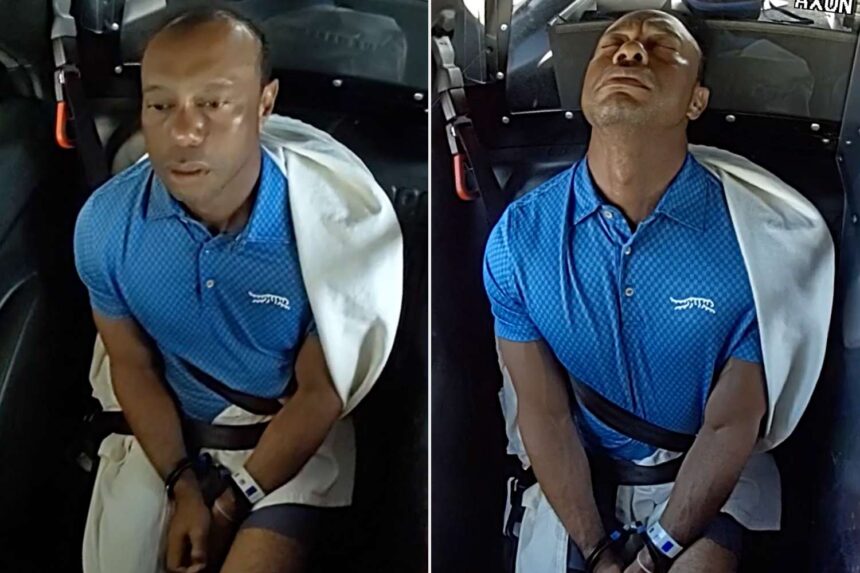
Bodycam footage from the arrest offered a glimpse into a disoriented moment.
Woods appeared confused as he was taken into custody, at one point asking officers if he was being arrested. During the drive to jail, he seemed physically uncomfortable — at times wincing, leaning back, and closing his eyes.
After several hours in custody, he was released on bond.



Stepping away to reset
Four days later, Woods broke his silence.
In a brief statement, he said he would be stepping away to focus on treatment and his overall well-being — a decision framed not as a retreat, but as a necessary reset.
He acknowledged the seriousness of the situation and spoke about wanting to return “healthier, stronger, and more focused,” both personally and professionally.
Support behind the scenes
Those close to Woods, including his children and partner, are said to be supporting him through this period.
An unnamed source described him as “embarrassed and ashamed,” but also determined to address the issues that led to the arrest.
It’s a familiar pattern in Woods’ life — moments of public scrutiny followed by attempts to rebuild, often away from the spotlight.
A career shaped by endurance
For years, Woods has dealt with persistent physical pain, undergoing multiple surgeries that have affected both his daily life and his time on the course.
That context doesn’t explain the incident, but it adds another layer to how it’s being understood — not just as a legal matter, but as part of a longer, more human story about health and strain.
Why this moment resonates
For many fans, Woods isn’t just an athlete. He’s a symbol of pushing through — sometimes beyond what seems sustainable.
Moments like this invite a different kind of reflection: not about trophies or rankings, but about limits, recovery, and what it means to step back when continuing forward becomes too costly.
A quieter chapter ahead
There’s no clear timeline for Woods’ return, and perhaps that’s the point.
For now, the focus isn’t on competition, but on recovery — something less visible, but no less demanding.
And for someone who has spent decades in the public eye, this chapter may be one of the most personal yet.