





Every spring, the steps of the Metropolitan Museum of Art become something more than a red carpet. They turn into a stage — part fashion show, part cultural mirror, part carefully choreographed spectacle.
This year’s Met Gala felt especially theatrical.
Built around the Costume Institute’s exhibition, “Costume Art,” and guided by the dress code “Fashion as Art,” the evening invited guests to think beyond glamour. What emerged was a night of sculptural silhouettes, cinematic references, and clothing that often looked closer to museum pieces than eveningwear.
When Beyoncé Arrived, the Room Shifted
Even by Met Gala standards, Beyoncé created a moment.
Her arrival sent photographers into a frenzy, with calls for “one more shot” echoing across the carpet long after she had paused. In a night built on star power, hers still felt singular — the kind of entrance that briefly resets the entire energy of the evening.
That ripple effect is part of what keeps the Met Gala culturally magnetic. Certain figures don’t simply attend; they define the mood around them.
Related News

Fashion That Covered the Eyes — but Drew Attention
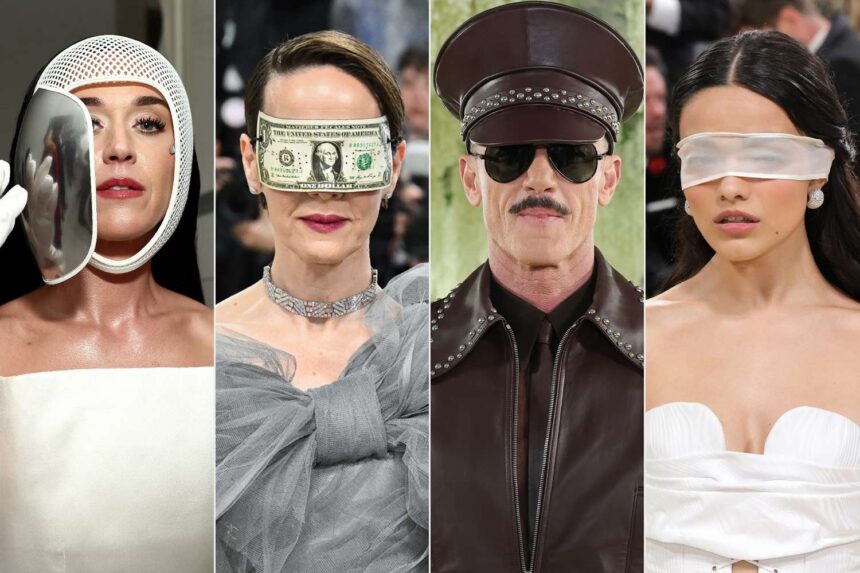
One of the clearest visual themes of the night was concealment.
Katy Perry, Sarah Paulson, Luke Evans, and Rachel Zegler were among those who embraced eye-covering accessories and dramatic facial pieces — bold styling choices that made beauty feel mysterious, and in some cases deliberately unsettling.
It was fashion designed not simply to be admired, but interpreted.
A Night of Personal References
Many of the strongest looks carried stories.



Anne Hathaway wore a hand-painted gown from Michael Kors Collection, created in collaboration with artist Peter McGough and paired with striking Bulgari jewels. The effect was elegant, artistic, and quietly rich in detail.
Sabrina Carpenter took a cinematic route, wearing a Dior design by Jonathan Anderson inspired by the 1954 classic Sabrina, forever associated with Audrey Hepburn’s timeless elegance.
And Ciara drew from ancient history, honoring Nefertiti with a gilded hairstyle that transformed her look into living sculpture.
More Family, More Connection
For all its exclusivity, this year’s gala also carried an unexpectedly personal note.
Co-chairs including Nicole Kidman and Beyoncé appeared alongside their daughters — a meaningful shift for an event traditionally reserved for adults.
That detail may seem small, but it subtly changed the atmosphere. The Met has long been about legacy in fashion; this year, it also hinted at legacy in family — style passed down, influence shared, new generations quietly stepping into view.
The Looks That Will Shape What Comes Next
Fashion at the Met rarely stays on the Met steps.
Body-conscious designs worn by Doja Cat and Hailey Bieber in Saint Laurent continued a growing move toward sharply tailored sensuality.
Rihanna and A$AP Rocky once again proved the power of a coordinated couple’s appearance — polished, intentional, and impossible to ignore.
And members of the Kardashian-Jenner family, including Kim Kardashian, Kylie Jenner, and Kendall Jenner, leaned into sculptural dressing — a reminder that silhouette itself has become one of fashion’s loudest forms of communication.
In a world flooded with images, shape speaks quickly.
And perhaps that is why the Met Gala still matters.
For one evening, clothing becomes conversation — about beauty, identity, memory, and how people choose to present themselves when the whole world is watching.
Then the lights fade, the carpet is rolled away, and the ideas begin quietly filtering into everyday life.